



Participating in an international trade show is a strategic opportunity to gain visibility in foreign markets, but companies often ask themselves: how much does an international exhibition stand really cost? There is no single answer: a project can range from a few thousand to tens of thousands of euros, depending on size, design, services, and location within the event. In this article, we will examine the main cost factors, practical examples, and how to set a realistic budget for your trade show presence.
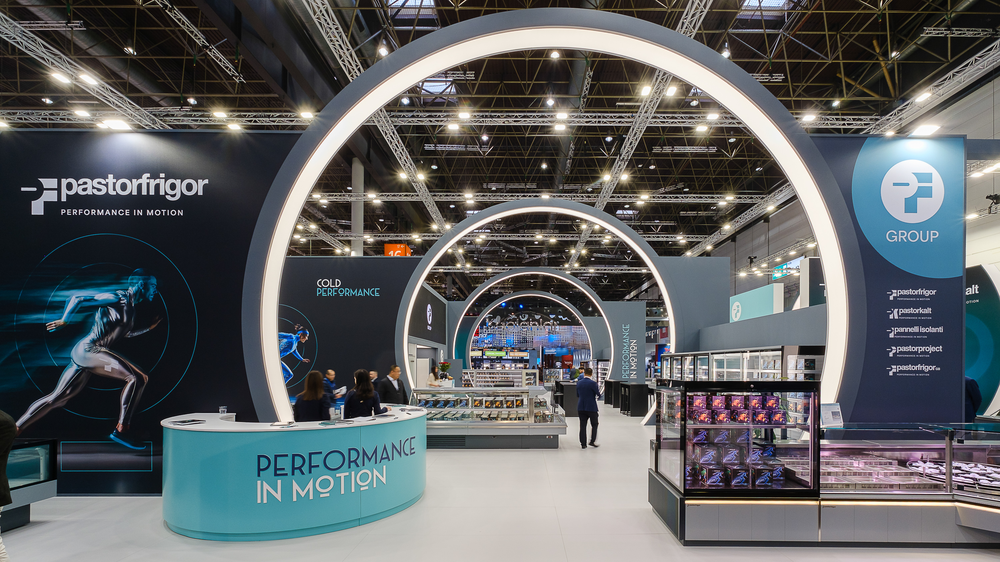
How to Calculate the Total Cost of a Booth
When we talk about "booth cost," we actually need to add up several items: exhibition space rental, design, build-up, furnishings, utilities, logistics, and staff. In many cases, space rental alone can account for 30–50% of the overall budget, while build-up and services significantly impact the remainder of the investment. Generally speaking, participating in an international trade show can push the total budget to between approximately €5,000 and €150,000, depending on the type of event and the desired brand impact.
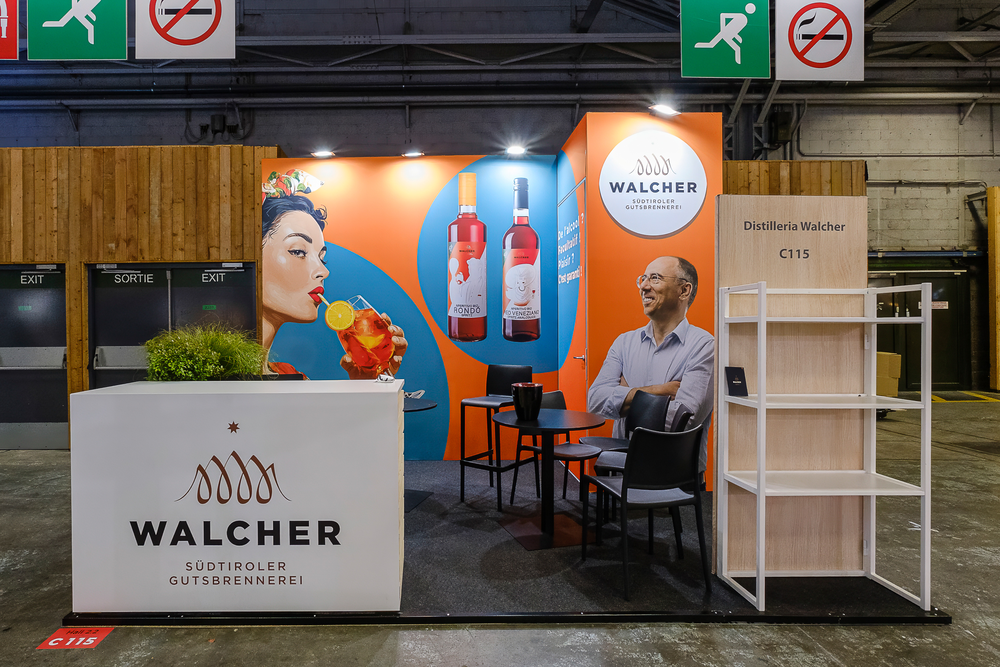
Modular Booth, Walcher, Vinexpo Paris 2026
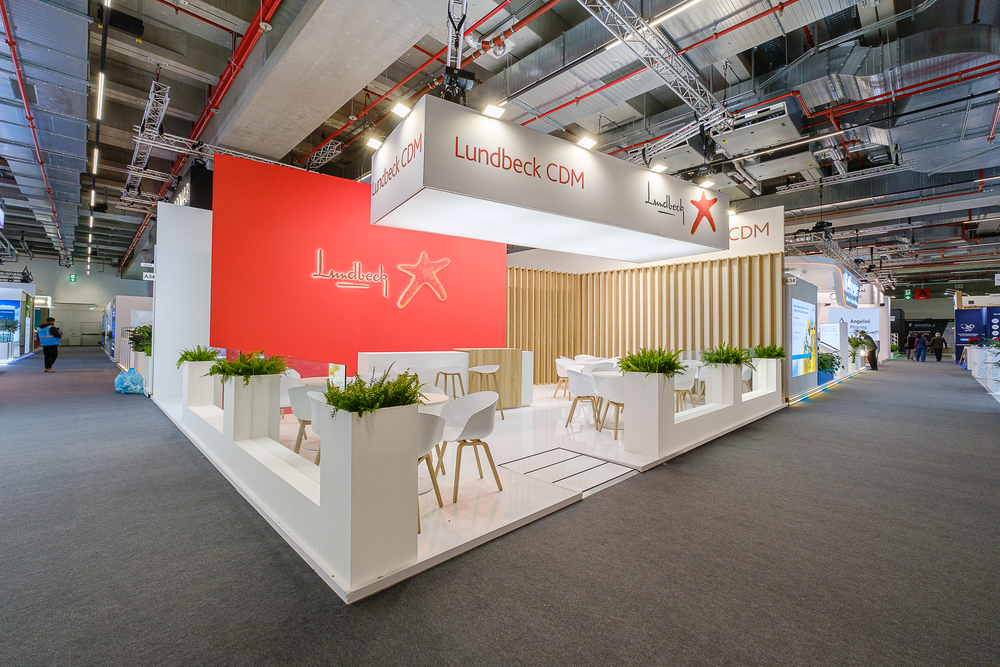
Hibrid Booth Lundbeck Cphi Francoforte 2025
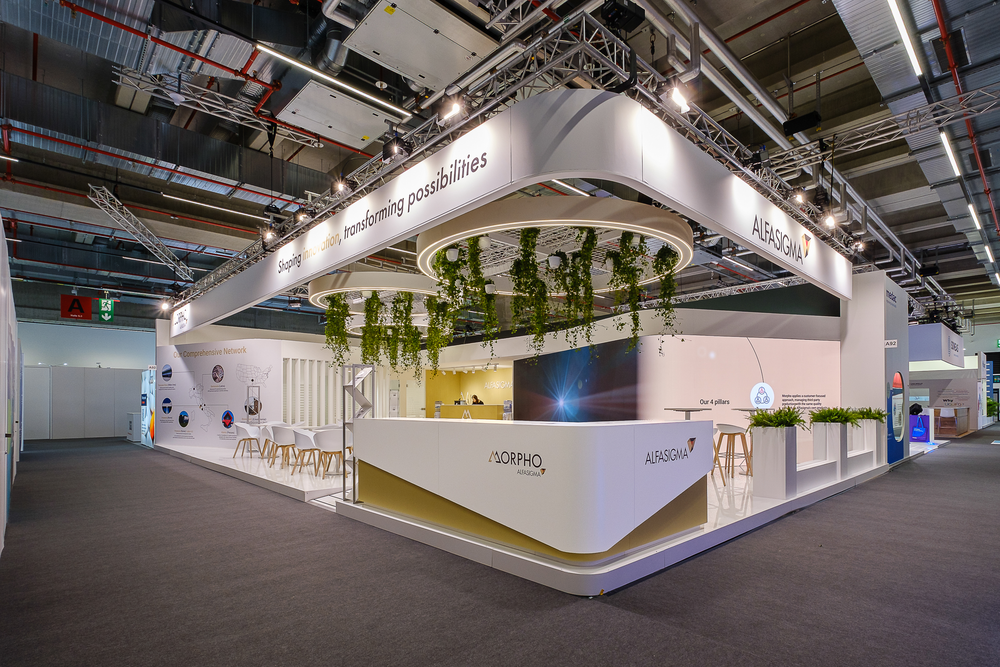
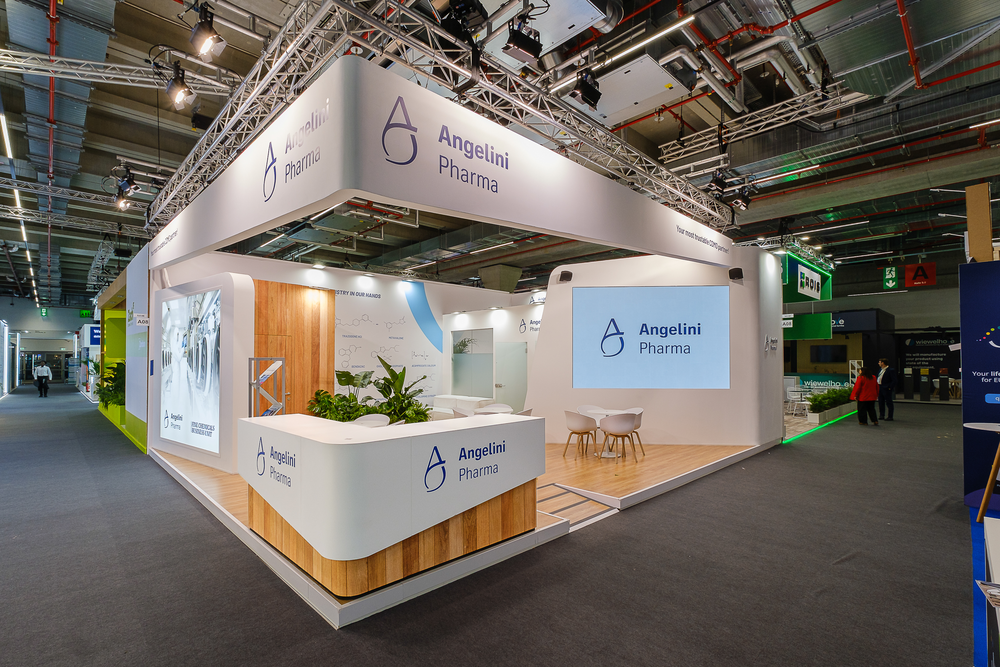
Fully custom Booth Alfasigma, Cphi Francoforte 2025
Key Factors Influencing Price
Booth Size and Location
Booth size is one of the first parameters that determine cost: more square metres mean more materials, more set-up time, and therefore higher costs. In addition, the location within the fair is crucial: booths near main entrances, in the centre of the hall, or next to major players can cost twice as much as those in peripheral areas, but they guarantee greater visibility and visitor traffic.
Booth Type (Modular, Hybrid, Custom)
La scelta del tipo di stand influenza molto il prezzo al metro quadro, con variazioni significative a seconda dell'area geografica. In Italia e nel mercato europeo, mediamente:
- Modular booth with custom graphics: approximately €250–500/m²
- Hybrid booth modular + custom elements): €500–900/m²
- Fully custom booth with premium finishes and advanced technologies can exceed €900–1,500/m² or more.
Moving outside Europe, costs per square metre change considerably. In the USA, the trade show market is among the most expensive in the world: a modular/portable booth starts at around $100–180/sq ft (approximately $1,100–1,950/m²), while a custom booth can reach $225–500/sq ft ($2,400–5,400/m²) in the most sought-after cities like Las Vegas or New York. On top of these costs come mandatory union rates for set-up and dismantling (often over $100/hour) and drayage (material handling from the dock to the booth), a typically American cost item that can add up significantly.
In Dubai (UAE), a global trade show hub hosting events such as GITEX, Arab Health, and Gulfood, build-up costs range from approximately AED 800–1,500/m² (€200–400/m²) for modular booths up to AED 3,000–6,000+/m² (€800–1,600+/m²) for premium or double-deck solutions. The local workforce is skilled and relatively competitive, but technical approvals required by venues such as the Dubai World Trade Centre (DWTC) or the Dubai Exhibition Centre (DEC) can generate additional costs for permits and structural certifications.
In Mexico, the main exhibition venues are concentrated in Mexico City, Guadalajara, and Monterrey. Labour and material costs are generally lower than in Europe and the USA, making Mexico a more accessible destination for companies entering the Latin American market. However, extended fair hours (often 10:00 AM–8:00 PM, with weekend openings) require more staff and different logistical planning. For European companies, it is often cost-effective to work with local booth builders, saving on intercontinental shipping costs.
Each solution has a different impact on brand positioning and ROI, which is why it is important to evaluate objectives and budget already during the design phase, taking into account the specific characteristics of the target market.
Design, Materials, and Technology
Graphic design, the use of quality materials (Plexiglas, fine wood, LED lights, sandwich panels, freestanding displays, video walls), and the integration of technology (touchscreens, configurators, augmented reality, dedicated apps) increase costs but can visually differentiate your booth from competitors. In addition, electrical systems, lighting, audio, and climate control—often managed or mandated by the organiser—are additional costs to factor into the budget.
Logistics, Transport, and Assembly
For an international event, logistics and transport have a decisive impact on the total. Packaging, international shipping, customs clearance, on-site assembly, and dismantling costs can represent a significant share, especially if the venue is on another continent or if the structures are complex and heavy.
An often underestimated factor is the "landing" cost of materials—that is, the total expenses needed to physically get the booth and products to the destination country: customs duties, import taxes (which can range from 0% to 80% depending on the country), local VAT, customs clearance fees, and customs broker charges. To avoid paying duties on exhibition materials intended for return, the ATA Carnet exists—an international customs document that allows temporary import without payment of duties and taxes. However, the Carnet requires advance planning (at least 2–4 weeks before shipment) and strict compliance with re-export deadlines.
In the USA, the trade show system includes mandatory drayage (handling from the dock to the booth), managed by the show's general contractor, with costs calculated by weight that can surprise European exhibitors. Union rates for electricians, carpenters, and riggers are high and non-negotiable. In Mexico, although labour is cheaper, customs documentation must be arranged for cross-border transit and, for shipments from Europe, sea transit times (3–4 weeks) or the higher costs of air freight must be factored in. In Dubai, logistics are generally efficient thanks to world-class port and airport infrastructure, but technical permits for build-up require specific certifications and strict timelines.
A strategic alternative to contain landing and transport costs is local material sourcing: relying on builders and suppliers in the country where the fair takes place eliminates international shipping, customs clearance, and repacking expenses, although it requires more careful quality control and remote coordination with the local partner.
Additional Services and Staff
Staff management should not be forgotten: travel, hotels, meals, transfers, and possible hospitality for guests or important clients can significantly increase the budget. In addition, services such as hostesses, interpreters, security, catering, on-site IT support, and promotional materials (brochures, samples, branded items) are items often overlooked but that contribute to delivering a cohesive and professional experience.
Geographical Variations and Material Sourcing
When exhibiting outside Europe, the factors affecting the final price multiply. It is essential to consider the impact of the following variables depending on the geographical area:
USA: the most expensive trade show market in the world. In addition to the already high costs for space and build-up, union rules require the use of local specialised labour for nearly every operation (electrical installation, carpentry, rigging). Drayage (material handling within the venue) is a mandatory cost calculated by weight and managed by the show's official contractor. Local material procurement is competitive, but it is essential to book well in advance to avoid surcharges. Rates for furniture rental, AV technology, and electrical services are among the highest globally.
Dubai (EAU): booth construction costs are on average lower than in the USA and Western Europe, thanks to a skilled workforce at competitive rates. However, the quality of local materials can vary, and technical approvals from venues (DWTC, DEC) add bureaucratic costs and tight timelines. The extreme climate requires care in transporting and storing sensitive materials. Temporary importation is generally straightforward, but it is necessary to work with freight forwarders experienced in the Gulf region.
Mexico: among the most affordable destinations in terms of labour and material costs. Major fairs (FABTECH Mexico, Expo Pack, Automechanika) offer spaces at competitive prices. Local sourcing is available in the main exhibition cities (Mexico City, Guadalajara, Monterrey), with local builders capable of managing complete projects at costs significantly lower than shipping from Europe. However, for European companies, NAFTA/USMCA customs procedures and sea shipping times (3–4 weeks) require even earlier planning.
In summary, the main additional cost factors linked to geographical area are: landing costs (duties, taxes, local VAT, customs broker), material sourcing (local vs. imported), regulated assembly rates (union or certified), mandatory drayage and handling, and finally the approval and certification timelines required by venues. A thorough analysis of these variables during the quotation phase can save up to 20–30% of the overall budget.
How to Set a Realistic Budget for Your Fair
To avoid surprises and maximise your return on investment, it is advisable to follow some key steps:
- Define the goal (lead generation, brand awareness, product launch, international networking) and choose fairs aligned with these objectives.
- Obtain the organiser's space price list in advance: compare different sizes and positions, using the space price as a basis for estimating 30–50% of the total budget.
- Break the budget down by macro-categories: space, design, build-up, utilities, logistics, staff, marketing.
- Request detailed quotes from 2–3 partners specialising in international exhibition fit-outs, asking for clarity on what is included (transport, dismantling, assembly, packaging, utilities).
- Pianifica con anticipo (almeno 6–8 mesi prima dell'evento) per evitare tariffe "last minute" e per avere margine di negoziazione su spazi e servizi.
Ready to Build Your International Trade Show Booth?
At Henoto Worldwide, we design and build custom booths for international fairs, optimising budget and visual impact to maximise your results.
and turn your next participation into a success.